The Rosicrucian Egyptian Museum: How San Jose Ended Up With the West's Largest Egyptian Collection on Display
H. Spencer Lewis of the Rosicrucian order bought the first piece, helped fund a 1921 dig at Amarna and first showed the collection in 1928. This weekend brings Halloween programs.
By the Bay Area Brief staff · Edited by Seamus McKenna · · 3 min read
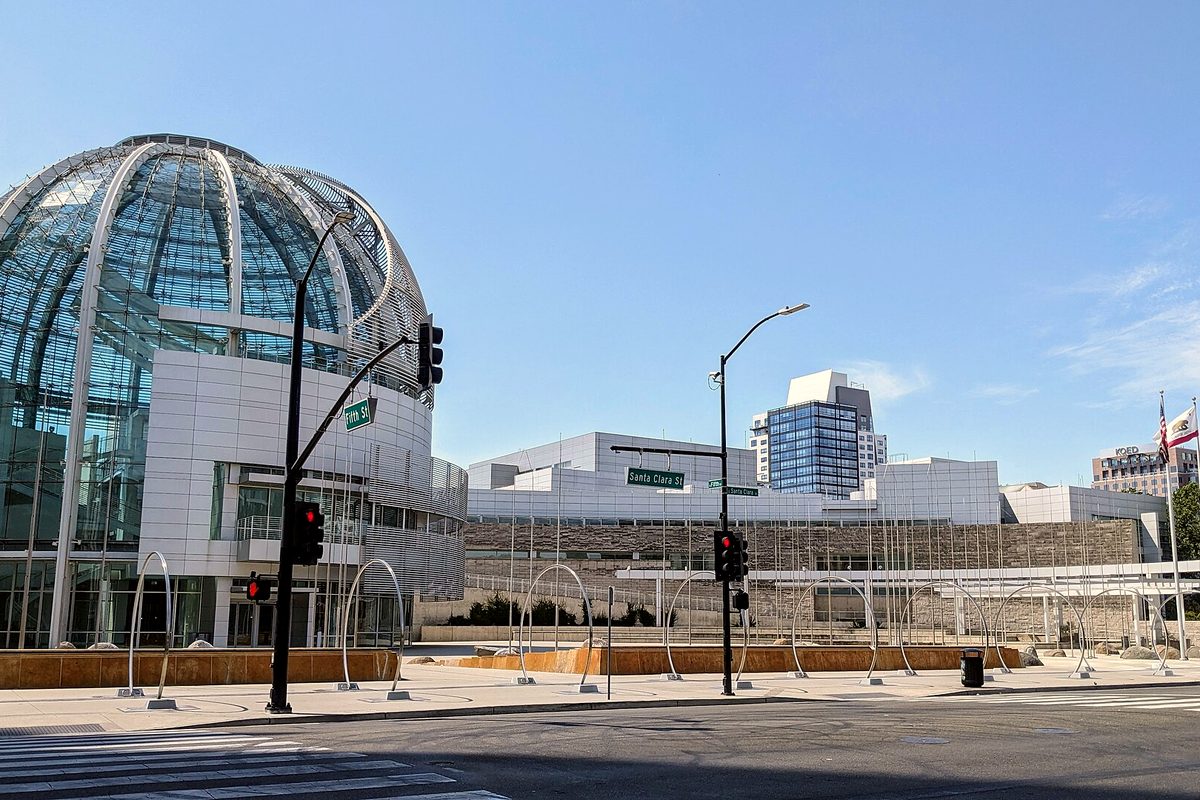
San Jose City Hall rotunda on a sunny day. Photo: The wub / Wikimedia Commons, CC BY-SA 4.0 (cropped, resized and color-graded). Archive photo of the area; not a photo of the events in this story.
In San Jose there is a museum built to look like an ancient Egyptian temple, with mummies inside.
How it began
The museum was founded by the Ancient Mystical Order Rosae Crucis (AMORC), according to Wikipedia. Its first artifact was a statue of the goddess Sekhmet, acquired by AMORC leader H. Spencer Lewis. Lewis helped fund a 1921 excavation at Amarna and first displayed the collection in 1928. The current buildings opened in November 1966. The planetarium on the grounds was the fifth built in the United States.
Today
The museum says it has the largest collection of Egyptian artifacts on exhibit in western North America and hosts more than 25,000 students a year. Visitors tour on their own with the museum's app. It lists hours as Fridays 9 a.m. to 4 p.m. and Saturdays and Sundays 11 a.m. to 6 p.m.
This weekend
The museum's site lists an Embalmer's Apprenticeship program on Oct. 31 at 1:30 p.m. and a scavenger hunt on Nov. 1.
Sources
This article is an original summary based on the following reporting. We encourage readers to visit the original sources for full coverage.
The day's Bay Area housing, business and neighborhood news, plus the world headlines that matter, in one short email. Free, and you can unsubscribe anytime.
We use your email only to send the Brief. Details in our privacy policy.
Sarah Winchester built her San Jose mansion over 36 years, from 1886 until her death in 1922. Today's guided Mansion Tour covers 110 of its 160 rooms in about 65 minutes, and much of the house's ghostly reputation came only after she died.
History Park is a 14-acre collection of original and reproduction homes and businesses at the south end of San Jose's Kelley Park, with paved streets and running trolleys. The 156-acre park around it was once Judge Lawrence Archer's orchard, Lone Oak, before the city bought it in 1951.
Overfelt Gardens on McKee Road was given to San Jose on one condition: keep it quiet. Here is the park's history, the Chinese Cultural Garden and the master plan to revive it.